
If you’ve scrolled through TikTok comments, Snapchat stories, or a group chat and spotted the letters “OFNG,” you’re not imagining things — this term really is popping up more often, and most people have no idea what it means. Unlike classic abbreviations like LOL or BRB, OFNG doesn’t have one fixed, dictionary-approved definition. Instead, it’s a fluid piece of internet slang that shifts depending on who’s typing it, where it’s posted, and what community they belong to.
This guide breaks down everything you need to know about OFNG — its most common meanings, where it came from, how it’s used across social platforms, and how you should respond if someone sends it to you.
What Does OFNG Actually Mean?
There isn’t a single, universally agreed-upon definition of OFNG. It’s an evolving slang term, and its meaning can change based on context, region, and platform. That said, a few interpretations show up again and again across chats and comment sections:
| Interpretation | Common Meaning | Typical Context |
| On Foenem Grave | Swearing something is true or serious | Street slang, TikTok, Chicago drill culture |
| Old Friends, New Goals | Reconnecting with old friends while chasing new ambitions | Instagram captions, motivational posts |
| Oh, For No Good Reason | Frustration or disbelief | Casual texting, reaction comments |
| Newcomer / acting new | Playful label for someone new to a group | Friend groups, gaming chats |
The most widely referenced version, especially in TikTok and Chicago-influenced slang, ties back to “on folks and them grave” (sometimes spelled “on foe nem grave”) — a phrase used to emphasize sincerity, similar to swearing on something important. But because slang spreads organically rather than through an official rulebook, the exact wording and meaning can shift from one group chat to the next.
Similar Terms & Alternatives

OFNG doesn’t exist in isolation. It sits alongside a handful of related expressions that convey similar emotions or serve similar conversational purposes:
- OFNR – A shortened variant, sometimes used interchangeably
- FRNG – A playful spin combining “friends reuniting” with “new goals”
- OMG / OMFG – Classic exclamations of shock, used in a similar emotional register
- SMH – Expresses disapproval or disbelief, though with less intensity than some OFNG uses
- OFC – “Of course,” a casual agreement marker often confused with OFNG at a glance
If you’re trying to gauge how strong or serious OFNG feels compared to other slang, think of it as sitting somewhere between a simple “ugh” and a more dramatic declaration of honesty — it carries more weight than a passive reaction but less formality than a full sentence.
Why Do Random Acronyms Like OFNG Appear?
Internet slang doesn’t get created in a boardroom — it emerges from the way people actually talk when they’re moving fast and typing on the fly. A few forces drive this constant churn of new abbreviations:
- Speed and convenience – Typing four letters is faster than typing a full phrase, especially in fast-moving group chats.
- In-group identity – Using a term your friends understand (and outsiders don’t) builds a sense of belonging.
- Platform culture – Apps like TikTok, Snapchat, and Instagram reward short, punchy captions, which pushes users toward acronyms.
- Regional dialects going viral – Slang that starts in a specific city or community (Chicago drill culture, for example) often spreads nationally once it appears in viral videos.
- Algorithm-driven repetition – Once a term shows up in a trending video, viewers pick it up and reuse it, accelerating its spread.
OFNG appears to have followed this exact path — starting as localized slang before spreading through comment sections and video captions.
OFNG in Social Media Culture
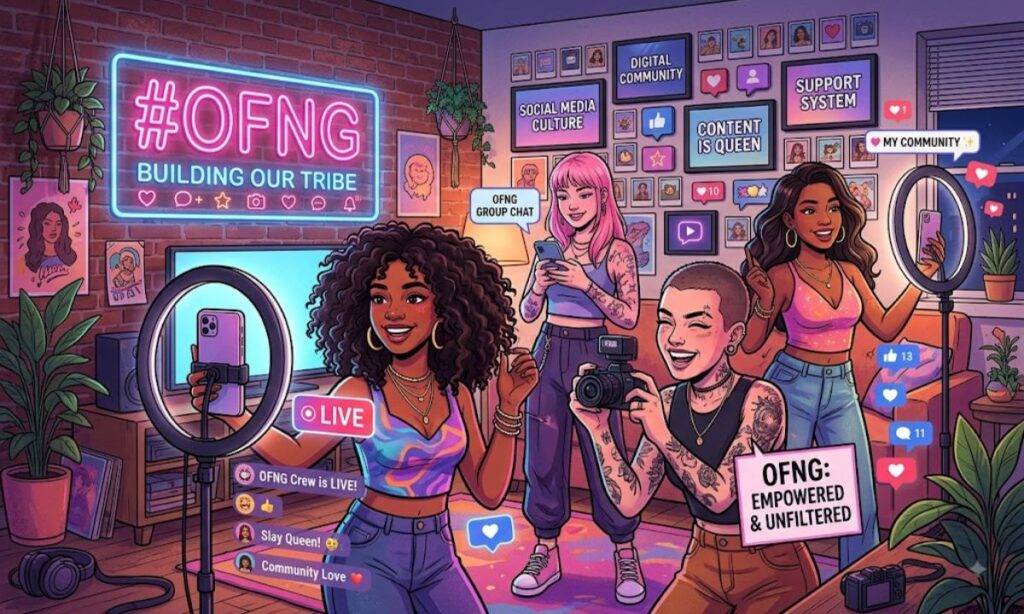
Social platforms are where OFNG really took off, and its tone can shift depending on where you encounter it:
- TikTok – Frequently used in captions and comments to add emphasis or drama, often tied to the “on foe nem grave” interpretation. It’s also shown up in creator content explaining or joking about the term itself.
- Snapchat – Tends to function as an inside-joke marker between close friends, with meaning varying by friend group.
- Instagram – More often used in captions with a positive spin, like reconnecting with old friends or celebrating personal growth.
- X (Twitter) and comment sections – Used loosely to react to a post, sometimes sarcastically, sometimes sincerely.
Because it’s still a niche term rather than mainstream slang, don’t be surprised if two people on the same platform use OFNG in completely different ways.
OFNG Meaning Chucky
You may have also seen OFNG paired with Chucky, the horror movie doll from the Child’s Play franchise. In this context, it’s not a reference to the character’s actual backstory — it’s fans using the “on foe nem grave” style of OFNG humorously in comments and memes reacting to shocking or intense moments in Chucky-related content. It’s essentially the same slang term, just applied to a specific pop-culture fandom.
OFNG Meaning Slang on TikTok
On TikTok specifically, creators have made entire videos explaining the term after confusion in comment sections. In one popular example, a creator jokingly misinterpreted OFNG before being corrected by another user, which itself became a viral moment. This kind of content — creators reacting to slang they don’t recognize — is part of why acronyms like OFNG spread so quickly: confusion itself becomes shareable content.
OFNG Meaning Urban Dictionary
User-submitted slang dictionaries list OFNG with definitions like “on folks and nem grave,” reinforcing the sincerity/swearing interpretation. Keep in mind that crowd-sourced slang dictionaries are built from individual submissions, so:
- Entries can vary wildly between contributors
- Definitions may be humorous, personal, or exaggerated
- Not every listed meaning reflects how the term is actually used day-to-day
OFN Meaning in Text
You might also come across the shorter version, OFN, without the final “G.” It generally carries the same core meaning — an expression of sincerity or emphasis, often translated as “on folks” or “on foe nem.” Some users treat OFN and OFNG as interchangeable, while others see OFN as simply a quicker, trimmed-down version.
How to Respond If Someone Says OFNG
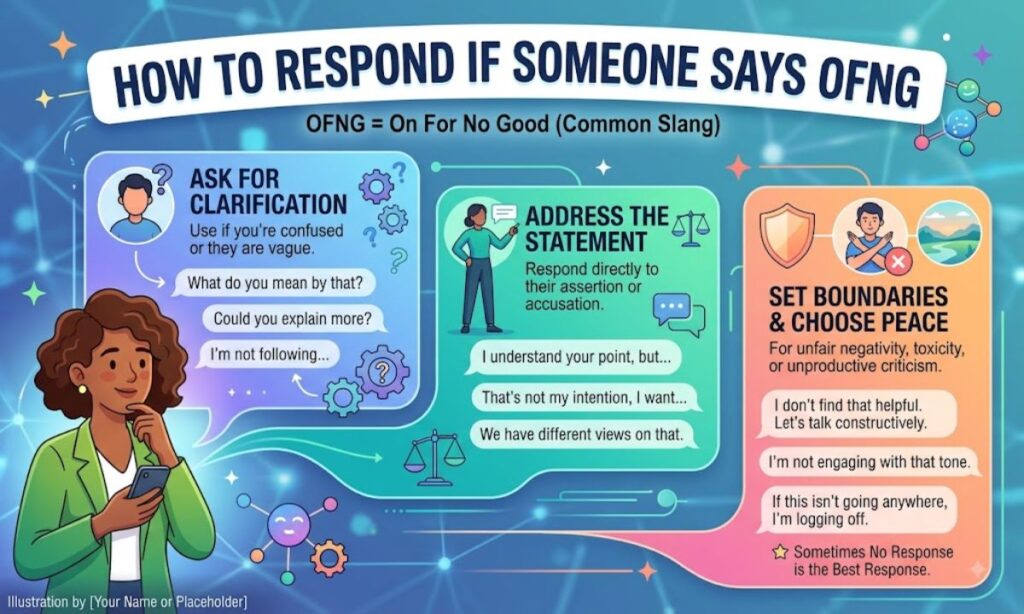
Not sure how to reply when OFNG lands in your DMs? Here’s a simple approach:
- Read the tone of the conversation first. Is it playful, emotional, or serious? That context tells you which meaning likely applies.
- Match their energy. If they’re using it to swear something’s true, a simple “fr?” or “no cap?” keeps the exchange natural.
- Ask if you’re unsure. A quick “what’s OFNG mean lol” is completely normal — plenty of people don’t know either.
- Avoid overthinking it. In most cases, OFNG isn’t meant to be analyzed deeply; it’s a quick, casual expression.
Is OFNG Used Worldwide?
Not really — at least not yet. OFNG appears to have started within specific U.S. slang communities, particularly linked to Chicago-based street and drill culture, before spreading through social media to a broader English-speaking audience. It’s not a globally recognized term the way “LOL” or “OMG” are, and non-English-speaking regions have largely not adopted it. Its reach is currently limited to online spaces where American internet slang trends dominate — mainly TikTok, Snapchat, and youth-driven comment culture in the U.S. and, to a lesser extent, other English-speaking countries.
Could OFNG Become Popular in the Future?
It’s possible, but not guaranteed. Slang terms follow unpredictable life cycles — some fade within weeks, while others (like “lit” or “no cap”) stick around for years and eventually enter mainstream vocabulary. A few factors could determine OFNG’s future:
- Continued creator content – If more influencers explain or joke about the term, awareness will keep growing.
- Cross-platform spread – Right now it’s concentrated on TikTok and Snapchat; broader adoption on X or in everyday texting would signal staying power.
- Simplicity – Short, easy-to-type acronyms tend to survive longer than complicated ones, which works in OFNG’s favor.
For now, it remains a niche-but-growing term rather than an established piece of mainstream slang.
Common Misunderstandings About OFNG
- “It’s offensive or vulgar.” Most common uses are neutral or positive; the confusion often comes from unrelated meanings people assume based on the letters.
- “It’s related to OnlyFans.” This is a frequent mix-up, but the two have no real connection.
- “It has one fixed meaning.” In reality, meaning shifts based on group, platform, and tone.
- “Everyone online knows what it means.” It’s still a fairly niche term — plenty of regular internet users have never encountered it.
Tips to Identify Real Slang vs Random Letters
With so many acronyms floating around, it helps to know how to separate genuine slang from a typo or one-off inside joke:
- Check for repeated usage across multiple posts, comments, or creators — real slang shows up more than once.
- Look at surrounding context — genuine slang usually fits naturally into a sentence’s tone and emotion.
- Search the term on a few different platforms to see if multiple sources describe similar meanings.
- Notice regional patterns — many slang terms trace back to a specific city or online community before spreading.
- Be cautious with single-source definitions — one random comment claiming a meaning isn’t strong evidence of common usage.
Final Words
OFNG is a great example of how quickly internet slang evolves and how meaning can shift depending on where — and who — you’re talking to. Whether it’s being used to emphasize sincerity, celebrate an old friendship, or express mild frustration, the underlying theme is the same: it’s a shorthand built for fast, casual digital conversation. As with most emerging slang, the safest approach is to pay attention to context, ask when you’re unsure, and not overanalyze four letters that were probably typed in a matter of seconds.
Frequently Asked Questions
What does OFNG mean in a text message?
It most commonly refers to swearing something is true (“on foe nem grave”), though meanings vary by context and group.
Is OFNG the same as OFN?
They’re closely related, with OFN often used as a shorter version carrying a similar meaning.
Where did OFNG originate?
It’s believed to have roots in Chicago-based street and drill culture before spreading through social media.
Is OFNG appropriate for professional use?
No, it’s strictly informal and should be avoided in emails, workplace chats, or formal writing.
Does OFNG mean the same thing on every platform?
Not exactly — tone and meaning can shift slightly between TikTok, Snapchat, Instagram, and text messages.
Is OFNG offensive?
Generally not — most interpretations are neutral, playful, or positive rather than vulgar.