
If you’ve scrolled through LinkedIn, watched the news, or sat through a company town hall lately, you’ve probably heard the term “DEI” thrown around. But what does DEI actually mean, and why has it become such a widely discussed topic in workplaces around the world?
This guide breaks down the DEI meaning in simple words, explains where the concept came from, and looks at how it plays out across different industries — from business and healthcare to law enforcement. No jargon, no fluff — just a clear explanation.
What Is the Meaning of DEI? A Simple Explanation
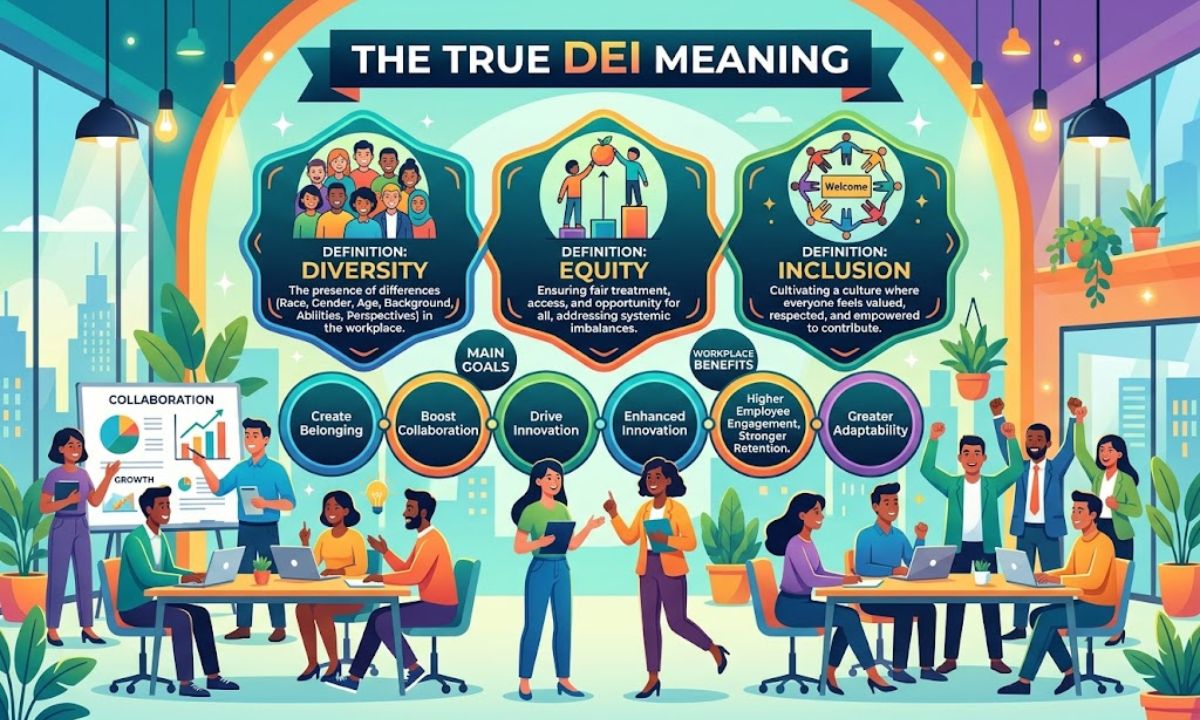
DEI stands for Diversity, Equity, and Inclusion. It’s a framework organizations use to build workplaces and communities where people of different backgrounds are represented, treated fairly, and given a genuine sense of belonging.
In simple words:
- Diversity = who is in the room
- Equity = how fairly resources and opportunities are distributed
- Inclusion = whether people actually feel valued once they’re there
Put together, DEI is less a single policy and more a philosophy — one that shapes hiring, leadership development, workplace culture, and decision-making.
DEI Meaning Explained: Definition, Importance, and Examples
To really understand DEI, it helps to break the acronym into its three individual pillars.
Diversity
Diversity refers to the presence of differences within a group — race, ethnicity, gender, age, sexual orientation, disability, religion, socioeconomic background, and even differences in thought or work style. A diverse team simply reflects a wide range of human experience.
Equity
Equity is often confused with equality, but they’re not the same thing. Equality means giving everyone identical resources. Equity means giving people what they specifically need to have a fair shot at success — recognizing that not everyone starts from the same place.
Inclusion
Inclusion is about culture and behavior. It’s what happens after diversity and equity are in place — do people feel heard, respected, and able to contribute? A diverse workplace without inclusion can still feel unwelcoming to the very people it recruited.
Real-Life Example
A company might recruit employees from varied backgrounds (diversity), offer flexible accommodations like adjustable schedules or accessibility tools based on individual needs (equity), and create employee resource groups where staff can voice concerns and shape policy (inclusion).
Equity vs. Equality vs. Inclusion: Quick Comparison
| Concept | What It Means | Example |
| Equality | Same resources for everyone | Every employee gets the same training budget |
| Equity | Resources matched to individual need | Extra mentoring for employees who lack existing networks |
| Diversity | Representation of different backgrounds | A hiring pool that includes varied races, genders, and abilities |
| Inclusion | Feeling valued and heard | Employees are invited to shape decisions, not just attend meetings |
What Does DEI Stand For? Understanding DEI Meaning
To restate it plainly: DEI stands for Diversity, Equity, and Inclusion. Some organizations expand the acronym further — you may also come across:
- DEIB (Diversity, Equity, Inclusion, Belonging)
- DEIA (Diversity, Equity, Inclusion, Accessibility)
- DE&I — simply a stylistic variation with an ampersand
These extended versions don’t change the core meaning; they just emphasize an additional priority the organization wants to spotlight.
DEI Meaning in Simple Words: Everything You Need to Know
If you strip away the corporate language, DEI essentially asks one question: is everyone getting a fair chance to succeed and be heard?
It shows up in everyday workplace practices such as:
- Writing job postings that don’t discourage qualified candidates from applying
- Offering mentorship programs for employees from underrepresented groups
- Reviewing pay and promotion data for unintended bias
- Creating accessible office spaces and remote-work accommodations
- Training managers on inclusive leadership and unconscious bias
DEI Meaning: Definition, Benefits, and Real-Life Examples in the Workplace
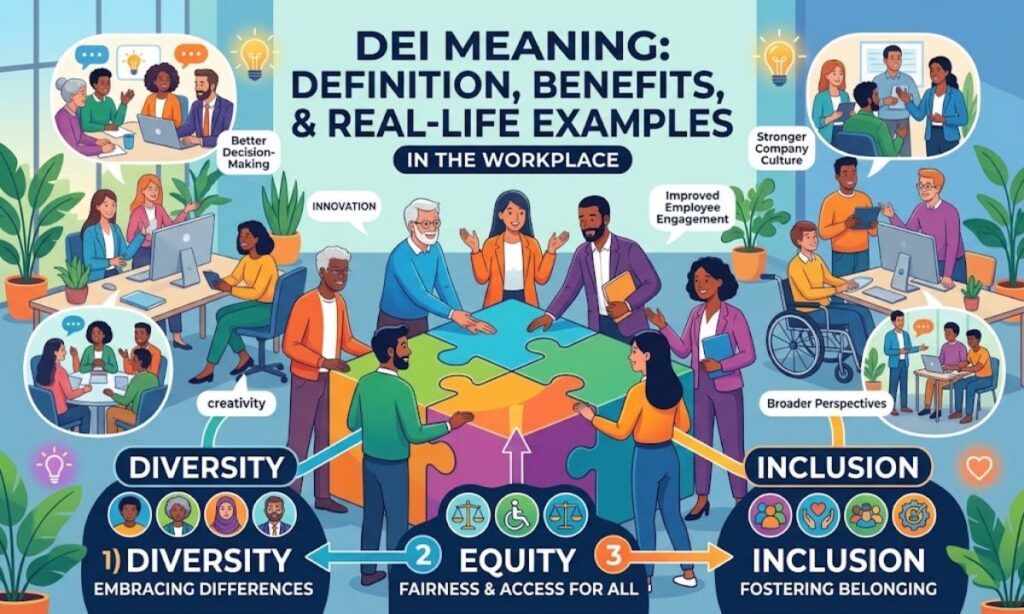
Organizations that invest in DEI initiatives often report measurable advantages. Here are the most commonly cited workplace benefits:
- Stronger innovation — diverse teams bring varied perspectives, which often leads to more creative problem-solving.
- Better decision-making — research has repeatedly linked diverse leadership teams to broader consideration of risks and opportunities.
- Higher employee engagement — people who feel included are more likely to speak up, take initiative, and stay with the company longer.
- Improved talent attraction and retention — job seekers, particularly younger generations, often weigh a company’s culture and values before accepting an offer.
- Enhanced reputation — customers and partners increasingly notice how organizations treat their people.
Common DEI Initiatives in Practice
- Bias-awareness training for hiring managers
- Employee resource groups (ERGs) for shared-identity communities
- Pay-equity audits
- Flexible and accessible workplace policies
- Structured mentorship and sponsorship programs
Dei Meaning Italian
In Italian, “DEI” is not typically used as an acronym — instead, the concept is usually written out in full as “Diversità, Equità e Inclusione.” Multinational companies operating in Italy often adopt the English acronym in internal documents while using the Italian phrase in local communications and training materials. It’s worth noting that “dei” is also a common Italian word (meaning “of the” — a contraction of “di” + “i”), so context matters when searching for the term in Italian-language material.
DEI Meaning in Business
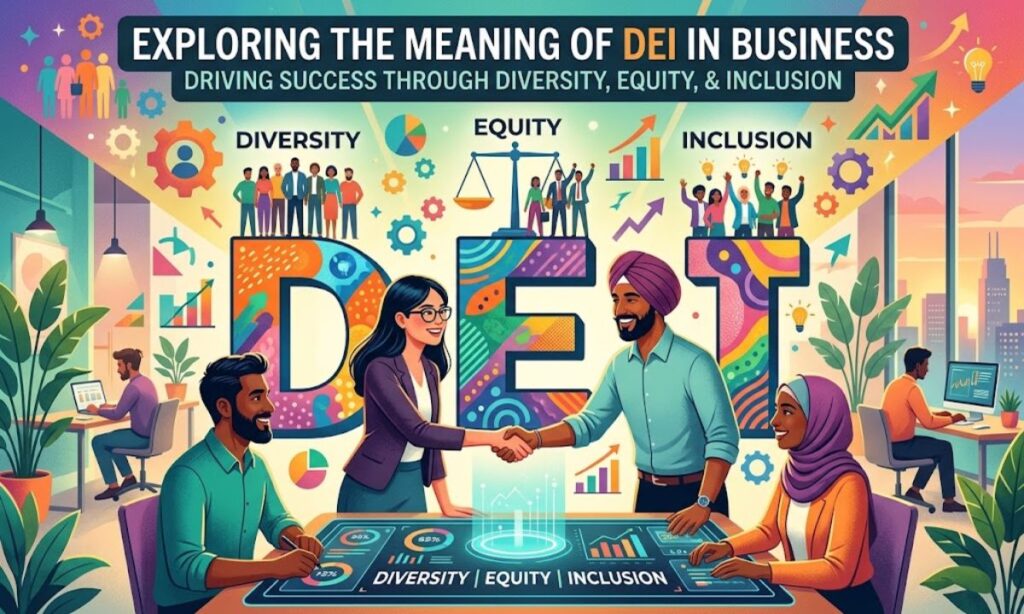
In a corporate setting, DEI refers to the policies, programs, and cultural practices a business adopts to build a fair and representative workforce. Common business applications include:
- Diversity metrics tracked in annual reports
- DEI officers or dedicated departments
- Supplier diversity programs (sourcing from minority- or women-owned businesses)
- Inclusive marketing and product design
For businesses, DEI is often framed both as an ethical commitment and a strategic advantage — companies argue that diverse teams help them better understand and serve diverse customer bases.
Dei Meaning in Police
Within law enforcement, DEI initiatives typically focus on:
- Recruiting officers who reflect the demographics of the communities they serve
- Bias-awareness and cultural-competency training
- Reviewing use-of-force policies and stop data for disparities
- Building community trust through outreach and transparency
Some police departments describe DEI as central to community trust-building, while the topic has also drawn public debate — with critics questioning how DEI-driven policy changes affect operations and outcomes, and supporters pointing to improved community relations. As with many DEI applications, the specifics and reception vary significantly by department and region.
DEI Meaning Medical
In healthcare, DEI is applied to both the workforce and patient care:
- Diversity — building a medical workforce that reflects the patient population
- Equity — ensuring patients have fair access to quality care regardless of background, language, or income
- Inclusion — creating a culture where staff and patients feel respected and heard
Healthcare-focused DEI efforts often cite improved patient communication, reduced disparities in treatment, and better health outcomes for underserved communities as key motivations.
A Note on the Broader Conversation Around DEI
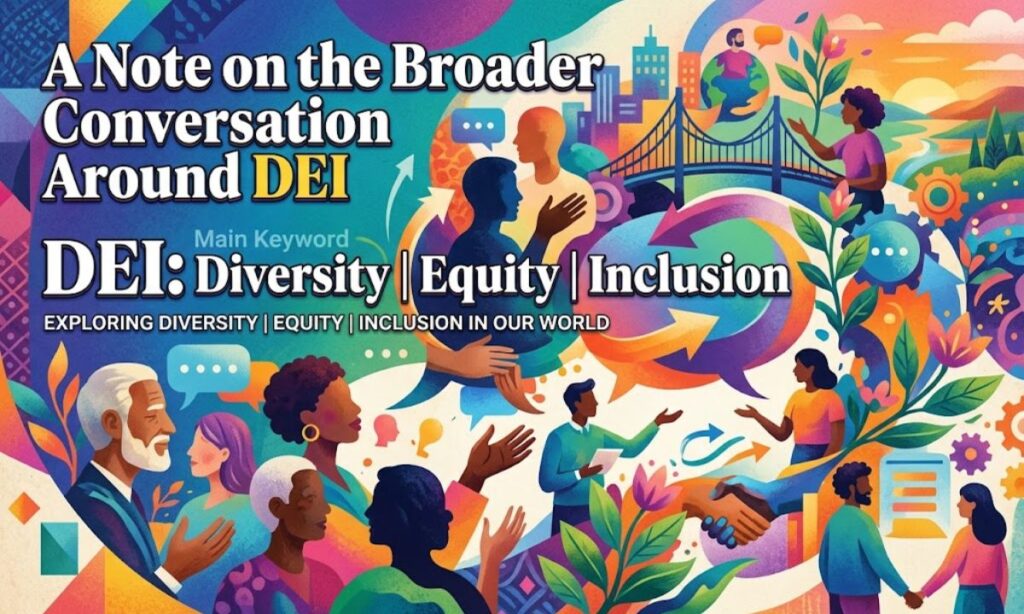
It’s worth acknowledging that DEI has become a genuinely debated topic in recent years. Supporters argue it corrects long-standing inequities and strengthens organizations. Critics argue that some DEI programs can be poorly implemented, create new forms of unfairness, or function more as symbolic gestures than substantive change. Several governments and companies have also scaled back formal DEI programs amid this debate. Understanding DEI’s definition doesn’t require taking a side in that debate — but it’s useful context for why the term generates such strong reactions.
Conclusion
At its core, DEI — Diversity, Equity, and Inclusion — is about building environments where different kinds of people can genuinely thrive, not just be present. Whether applied in business, healthcare, law enforcement, or everyday community life, the goal remains the same: fair treatment, real representation, and a culture where people feel they belong. As the conversation around DEI continues to evolve, understanding its actual meaning — separate from the political noise — helps you engage with the topic more thoughtfully.
Frequently Asked Questions
What does DEI stand for?
DEI stands for Diversity, Equity, and Inclusion.
Is DEI the same as affirmative action?
No. Affirmative action refers to specific legal policies around hiring and admissions, while DEI is a broader cultural and organizational framework.
What’s the difference between equity and equality?
Equality gives everyone the same resources; equity gives people what they individually need to have a fair opportunity.
Why do some companies use “DEIB” instead of “DEI”?
The added “B” stands for Belonging, emphasizing the emotional experience of feeling accepted, not just included.
Is DEI required by law?
Generally no — DEI programs are usually voluntary organizational initiatives, though some anti-discrimination laws overlap with DEI goals.
What is a DEI officer?
A DEI officer is a company role responsible for designing and overseeing diversity, equity, and inclusion strategy.