
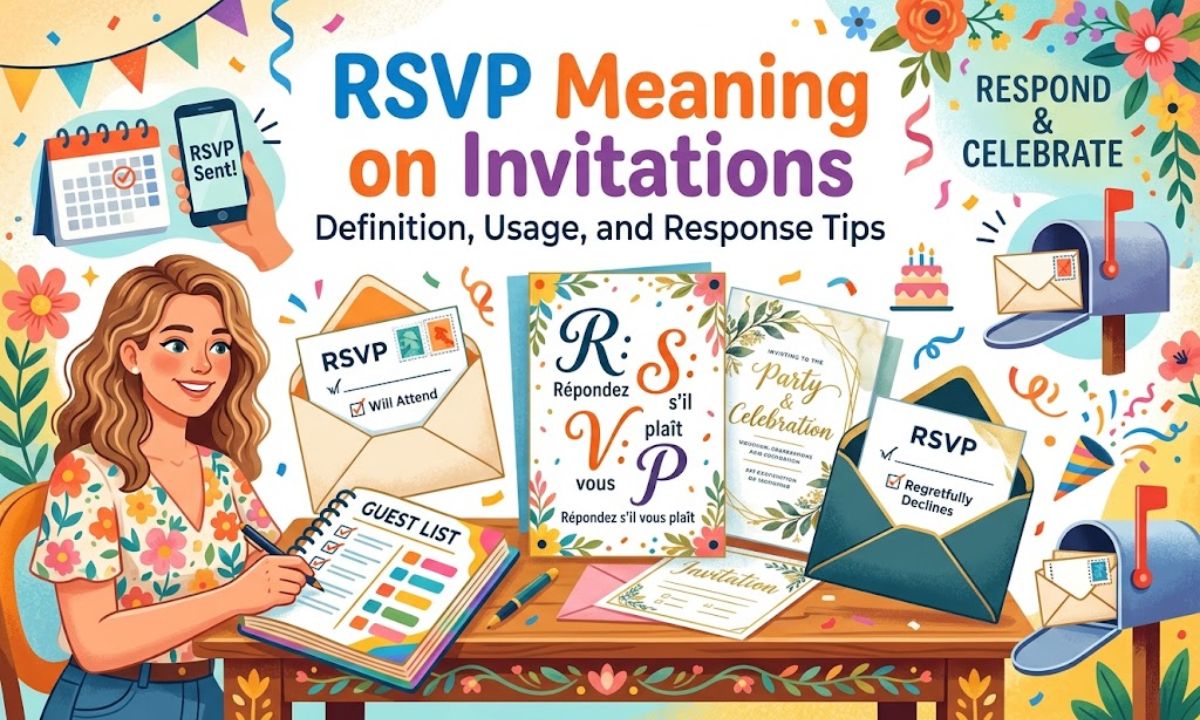
Seeing “RSVP” on an invitation and pausing to figure out what it actually means is more common than most people admit. It’s a small term, but it carries real weight — hosts plan food, seating, and budgets around it. Understanding what RSVP means and how to respond properly can save you from awkward mix-ups and help hosts plan their events with confidence.
This guide breaks down everything you need to know about RSVP — from its origin to how it’s used across weddings, invitation cards, workplace meetings, and even the medical field.
RSVP Meaning on Invitations
RSVP comes from the French phrase “répondez s’il vous plaît,” which translates to “please respond” or, more literally, “respond if you please.” When you see it on an invitation, the host is politely asking you to confirm whether or not you’ll attend.
This isn’t just a formality — it directly affects event planning. Hosts use RSVP responses to finalize:
- Headcounts for catering
- Seating arrangements
- Venue capacity requirements
- Budget and gift planning
An invitation with an RSVP request usually expects a reply either way, whether you’re attending or not, unless it specifically says “regrets only.”
What Does RSVP Mean on a Wedding Invitation?
On a wedding invitation, RSVP carries extra weight compared to casual events. Weddings often involve tight vendor deadlines, so your response directly impacts the couple’s final planning.
A wedding RSVP typically asks for more than a simple yes or no. You may be asked to provide:
| Information Requested | Why It Matters |
| Your name and title | Formal seating and place cards |
| Number of guests attending | Headcount for caterers and venue |
| Meal preference | Catering order accuracy |
| Dietary restrictions | Guest comfort and safety |
| Attendance at related events | Welcome dinners, brunches, etc. |
Wedding RSVPs also tend to have firmer cutoff dates, since caterers and venues usually need final numbers weeks in advance. Responding late or not at all can create real stress for the couple during an already busy planning period.
How Do You RSVP to an Invitation?

Responding to an RSVP is simple once you know the basic etiquette. Here’s a clear step-by-step approach:
- Read the invitation carefully — check the RSVP deadline and preferred response method.
- Match the response format — if it’s a mailed card, send a card back; if it’s digital, reply online.
- Confirm attendance clearly — state whether you’re attending, and for how many people.
- Add requested details — meal choice, dietary needs, or plus-one names if applicable.
- Respond before the deadline — ideally within a few days of receiving the invitation, not at the last minute.
- Notify the host of changes — if your plans change after responding, let them know as soon as possible.
If an invitation includes a phone number or online link, use whichever method the host prefers rather than defaulting to your own.
RSVP Examples for Different Events
The tone and detail of an RSVP can shift depending on the type of event. Here are a few quick examples:
- Wedding: “We are delighted to accept” or “We regretfully decline.”
- Birthday party: “Count me in! I’ll be there.” or “So sorry, I can’t make it — happy birthday in advance!”
- Corporate event: “Confirming my attendance for the annual conference on [date].”
- Casual gathering: “Yes, I’ll be there!” or “Can’t make it this time, but thanks for the invite.”
Formal events typically call for polished, complete sentences, while casual invitations allow for a more relaxed, friendly tone.
What Happens If You Don’t RSVP?
Failing to respond to an RSVP request isn’t just a minor slip — it can create real complications for the host. Here’s what typically happens:
- The host may assume non-attendance, which could mean you’re left off the final guest list.
- Seating and catering numbers get thrown off, especially for formal events like weddings.
- You may miss last-minute details, such as venue changes or schedule updates.
- It’s considered poor etiquette, particularly for events with a clear RSVP deadline.
If you’re unsure about your plans, it’s better to reach out to the host directly and ask for more time rather than staying silent.
RSVP Meaning in Wedding Cards
In a wedding card, RSVP still stands for “répondez s’il vous plaît,” but it’s presented in a more formal, structured way. Wedding RSVP cards commonly include a line for guest names, meal selection boxes, and a clear reply-by date.
Traditionally, guests mail these cards back, but many couples now offer QR codes or wedding website links for a faster digital response. Regardless of the format, the core expectation stays the same: confirm your attendance so the couple can finalize their plans.
RSVP Meaning in Invitation Card
On a general invitation card, whether for a birthday, anniversary, or social event, RSVP simply signals that the host needs a reply. It’s usually printed near the bottom of the card, often followed by a phone number, email, or “by [date]” instruction.
Unlike weddings, these invitations are usually less formal and may only require a simple “yes” or “no” rather than detailed meal or guest information.
RSVP Meaning in Medical
It’s worth clarifying a common point of confusion: in the medical field, the abbreviation RSV (without the “P”) refers to Respiratory Syncytial Virus, a common respiratory illness that can be serious in young children and older adults. This is a completely different term from RSVP.
RSVP itself doesn’t have a separate standalone medical definition — in healthcare settings, it’s typically used the same way as anywhere else, such as confirming attendance for a medical conference, training session, or hospital event invitation.
RSVP Meaning in Teams
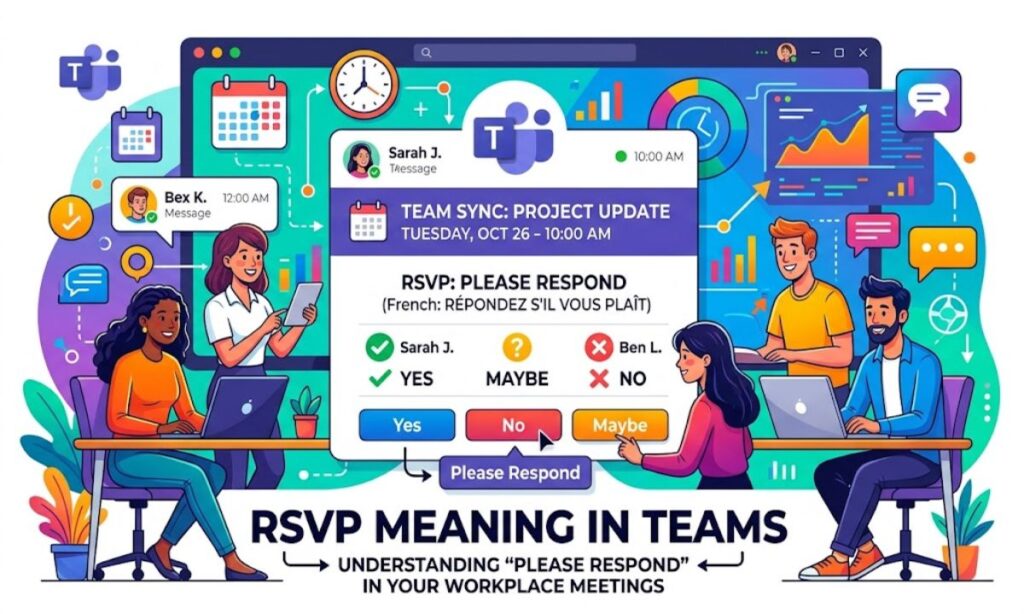
In Microsoft Teams and similar workplace tools, RSVP is used to confirm your attendance for scheduled meetings. When you receive a meeting invite, you’ll usually see an RSVP option with choices like:
- Accept — confirms you’ll attend
- Tentative — marks your attendance as uncertain
- Decline — lets the organizer know you won’t be attending
Selecting a response updates your calendar and notifies the meeting organizer, helping teams plan discussions and manage schedules more efficiently, much like a traditional event RSVP does for social gatherings.
Conclusion
RSVP is a small phrase with a surprisingly big role in how events, weddings, and even workplace meetings get organized. Whether you’re replying to a wedding invitation, a birthday card, or a Microsoft Teams meeting request, the core idea stays the same: your response helps the host plan effectively. Responding promptly, clearly, and in the requested format is a simple courtesy that goes a long way — and now that you know exactly what RSVP means across different contexts, you’ll never have to second-guess that four-letter abbreviation again.
Frequently Asked Questions
What does RSVP stand for?
RSVP stands for the French phrase “répondez s’il vous plaît,” meaning “please respond.”
Is RSVP only used for weddings?
No, RSVP is used across many events, including birthdays, corporate meetings, and casual gatherings.
What does “regrets only” mean on an invitation?
It means you only need to respond if you cannot attend; otherwise, attendance is assumed.
How soon should I RSVP to an invitation?
Ideally within a few days to a week of receiving the invitation, well before the stated deadline.
Can I change my RSVP after responding?
Yes, but you should notify the host as soon as possible if your attendance plans change.